

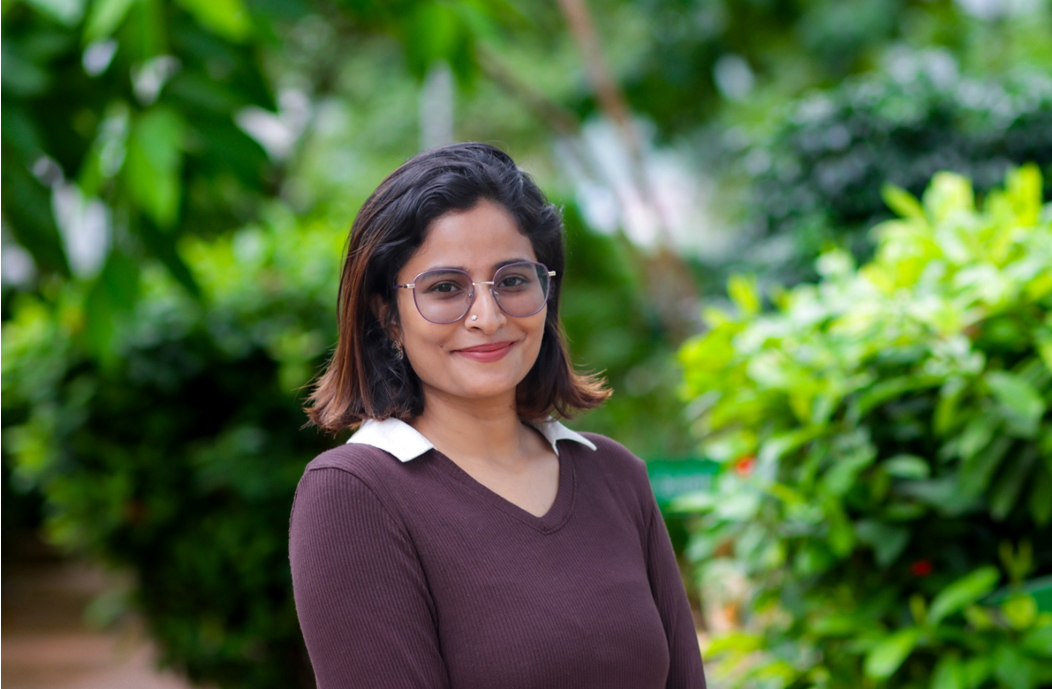
By- Dr Amal Latif
Assistant Professor, Department of Sociology and Anthropology

Easwari School of Liberal Arts (ESLA) ,SRM University-AP ( Amaravati) Andhra Pradesh
Kozhikode is steadily growing into one of Kerala’s most vibrant cultural spaces. This January, the city came alive with the Kerala Literature Festival and the Kerala Disability Festival, drawing students, parents, and people from diverse communities in remarkable numbers. The energy felt collective, curious, and deeply inclusive.
As a little girl growing up in Kerala, conversations around gender violence, marginality and disability were never easy. They felt distant, even alien. There was always the quiet fear of being seen as “too much” for standing up for what I believed in. Kerala, for me, has long been a paradox: celebrated for its literacy and social development, yet still marked by silences around marginality. That is why standing on the beach in Kozhikode, witnessing once-taboo ideas being spoken aloud, discussed openly, and received with warmth, felt deeply personal. It felt like healing, something long overdue.
Today, as an academic, I would like to share my experience of the Kerala Disability Festival. Organised by Thanal Daya Rehabilitation Trust, the four-day event(29 January-1 February) was a collaborative effort involving more than 30 disability organisations and institutions from across the state.
What stood out was how the festival went beyond symbolic participation and demonstrated why persons with disabilities must be included in the design of public spaces, policies, and systems. It spoke meaningfully to the idea of universal design, not as an abstract concept as we had always read and discussed, but as a lived, visible practice.From a website equipped with accessibility widgets to a carefully curated venue that prioritised mobility, comfort, and inclusion, the festival offered a glimpse of what thoughtful, people-centred planning can look like. But more than physical access, it was about a deeper shift: designing a world where no one has to ask for permission to belong.
For many in Kerala, it introduced a new way of thinking about access, dignity, and belonging. When I say a new way of thinking, I intend the importance of understanding access and dignity, not as accommodation, but as a right, just as the curator of the event, Abhilash, mentioned in the note on the event, “beyond fleeting sympathy toward unbreakable solidarity, and leap from accommodation to co-creation”. True to that promise, the conversations and experiences at the Kerala Disability Festival went far beyond sympathy and the familiar framing of disability as something that calls for charity. Instead, it asked us to rethink how we imagine public life itself. What would it mean if persons with disabilities were not just included at the margins, but were central to how we design our spaces, systems, and futures?
What made these exchanges meaningful was the openness with which difficult, often overlooked questions within the discourse of disability were addressed. The discussions were wide-ranging, moving across themes of universal design and accessibility, the history and direction of disability movements, and the complex ways religion and social attitudes shape how disability is understood in public life. There were important conversations on sexuality and disability, inclusive education, and the politics of language, how the words we use every day can either enable dignity and belonging or quietlyreinforce exclusion. To witness these ideas being discussed openly, and more importantly, practised, felt both hopeful and necessary. It showed what becomes possible when we move from sympathy to solidarity, and from accommodation to co-creation.
What stood out was the gentle and firm effort to make these ideas accessible to everyone in the audience, including ordinary citizens who may not engage with these conversations in their daily lives. In the Indian context, where disability is still often spoken about in the language of care, dependence, or goodwill, this felt especially critical. The festival reminded us that accessibility is not an act of generosity; it is a matter of social justice. Universal design is not just about ramps and assistive tools, but about reimagining society so that difference is anticipated, respected, and welcomed from the very beginning.
Accessibility, I have come to realise, moves far beyond compliance checklists. It is a commitment to human rights, ensuring equal opportunity in education and participation in every form of public life and living. It should live in our classrooms, in our teaching practices, and in the small decisions we make every day as educators.
As an academic in India, I often find myself thinking about the many ways in which universities give us certain checklists of how we must imagine a “standard” student. A student who can see, hear, move, read, write, and process intense information in expected ways and within a certain time. Those who fall outside the designed frame are expected to catch up. Accessibility then becomes an afterthought in a system that reduces a student to forms, certificates, or occasional accommodations on the basis of the convenience of the institutions.
The real inclusion begins much earlier, with curating tools and methodologies that strive for inclusion. It can mean using multiple ways of explaining an idea, speaking, writing key points on the board or incorporating visual material. It can mean being mindful of language, pace in speaking, and rethinking assessment formatsas structures that can be made more humane.In the Indian university context, many of these practices are still overlooked. We speak of inclusion in policy documents, but rarely pause to ask what it feels like to sit in a classroom that is not designed with you in mind. For students with disabilities, first-generation learners, or those navigating invisible challenges, the classroom can quietly become a space of anxiety instead of possibility. This again is about seeing accessibility not as an act of generosity, but as an ethic of care and responsibility as educators.
Inclusivity is not an extra skill one has to acquire; it is where everything should begin. A classroom, the design of a public space, a website, a policy, all the above must be imagined from the ground up with accessibility in mind. When inclusion becomes an afterthought, people are forced to ask for access; when inclusion becomes mere compliance, it is reduced to a checklist, something to be performed, measured, and later forgotten. But when it is the starting point, dignity is built into the experience itself.
At its core, Kerala Disability Festival askedquestions of human rights and social justice. Who gets to participate? Who feels seen and heard? Who has to struggle to enter spaces that others move through with ease?